
Bulletproof glass
Laminated ballistic glass built from glass plies and interlayers. Choose the class against the threat; we settle thickness, weight, size and shape together. The class is documented per project with the test report of the glass supplied.
- BR1 to BR7 and SG1
- NS and S
- Flat or curved
- Insulated option
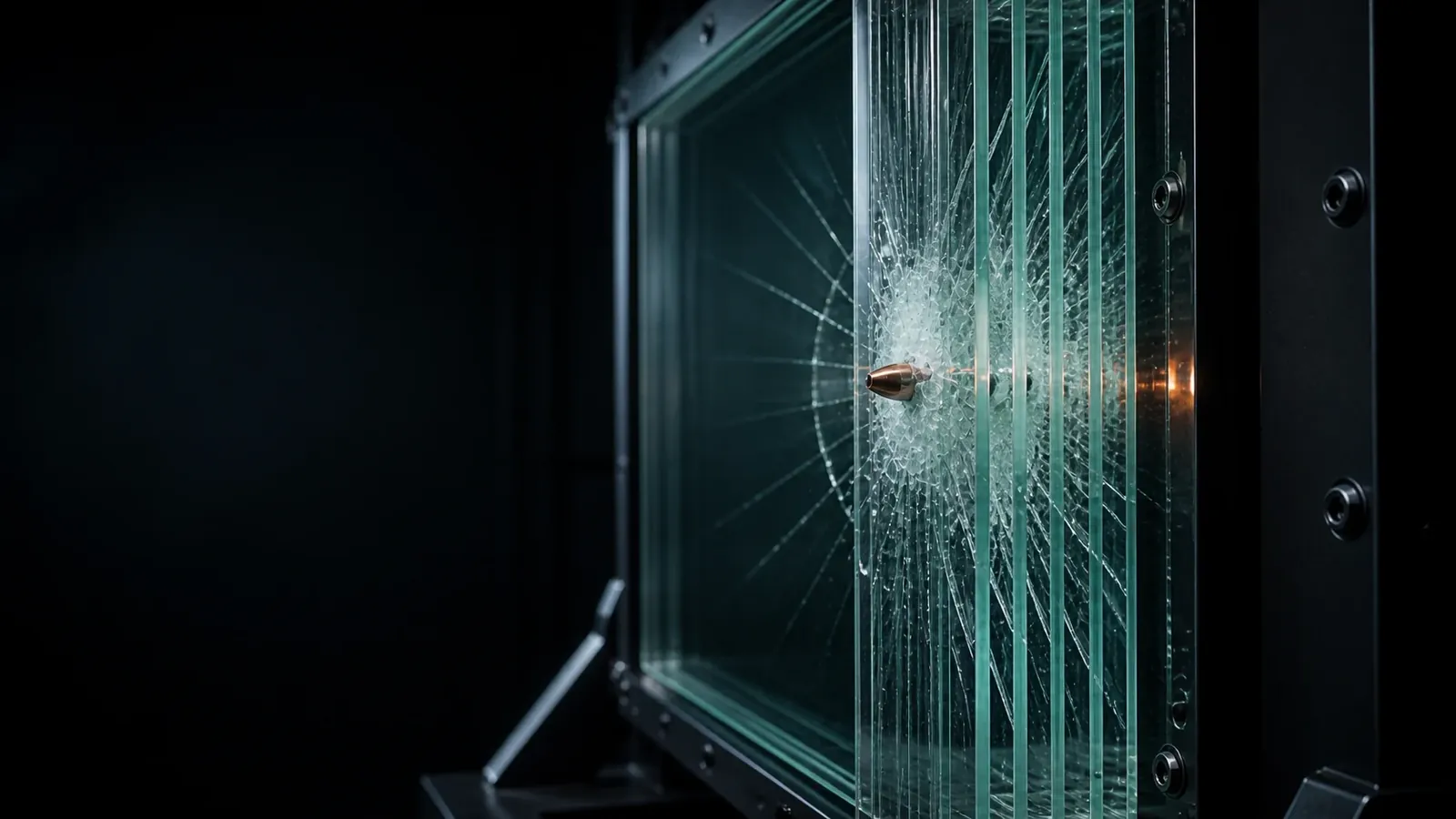
Choose the threat first; the glass thickens to match.
Compare EN 1063 classes. Thickness and weight are supplier reference values; the exact build-up is confirmed by the test report.
BR4NS
- Weapon
- Handgun
- Calibre
- .44 Magnum
- Bullet type
- FJ/FN/SC
- Bullet mass
- 15.6 g
- Range
- 5 m
- Velocity
- 440 m/s
Highlights
Class matched to the threat
Eight classes, from handguns to long-barrel rifles. The right class follows the risk and use of the protected space.
NS or S
NS sheds no spall on the protected side. S is thinner and lighter but may spall. The choice depends on who stands behind the glass.
Flat or curved
Flat for counters, booths and facades; curved for special architectural openings.
Insulated option
An insulated (double-glazed) build is available in every BR class.
Made to size
Cutting, edge work and packing follow your project sizes, shipped in export packaging.
Documented delivery
Class, thickness and build-up are documented per project with the test report of the glass supplied.
Glass alone does not protect
Protection comes from glass, frame, fixing and installation working to the same class. We plan all four under one quote.
- 01
Glass
Class against the threat, NS or S, thickness and build-up.
- 02
Frame
Profiles, reinforcement and seals rated with the glass.
- 03
Fixing
Anchoring to wall and floor, joint details.
- 04
Installation
Survey, site preparation, mounting and final check.
Protection classes and typical glass values
| EN 1063 | Weapon | Calibre | Bullet type | Bullet mass | Range | Velocity | NS, no spall | S, spall possible |
|---|---|---|---|---|---|---|---|---|
| BR1 | Handgun | .22 LR | L/RN | 2.6 g | 10 m | 360 m/s | 12 mm · 20 kg/m² | 15 mm · 32 kg/m² |
| BR2 | Handgun | 9×19 mm | FJ/RN/SC | 8 g | 5 m | 400 m/s | 17 mm · 32 kg/m² | 21 mm · 45 kg/m² |
| BR3 | Revolver | .357 Magnum | FJ/CB/SC | 10.2 g | 5 m | 430 m/s | 19 mm · 37 kg/m² | 23 mm · 52 kg/m² |
| BR4 | Handgun | .44 Magnum | FJ/FN/SC | 15.6 g | 5 m | 440 m/s | 25 mm · 50 kg/m² | 34 mm · 77 kg/m² |
| BR5 | Rifle | 5,56×45 NATO | FJ/PB/SCP | 4 g | 10 m | 950 m/s | 39 mm · 84 kg/m² | 42 mm · 97 kg/m² |
| BR6 | Rifle | 7,62×51 NATO | FJ/PB/SC | 9.5 g | 10 m | 830 m/s | 46 mm · 97 kg/m² | 49 mm · 110 kg/m² |
| BR7 | Rifle | 7,62×51 NATO | FJ/PB/HC | 9.8 g | 10 m | 820 m/s | 92 mm · 194 kg/m² | 66 mm · 154 kg/m²Single-shot value |
| SG1 | Shotgun | 12/70 | Slug | 31 g | 10 m | 420 m/s | 30 mm · 61 kg/m² | n/a |
Threat definitions are from EN 1063; thickness and weight come from the supplier reference table.
An insulated (double-glazed) option is available in every BR class.
L: lead · RN: round nose · FJ: full jacket · SC: soft core · CB: cone bullet · FN: flat nose · PB: pointed bullet · SCP: soft core with steel penetrator · HC: hard core
Applications
Questions
What is the difference between BR4 and BR6?
BR4 is tested against a .44 Magnum handgun; BR6 against a 7.62×51 long-barrel rifle. Rifle classes are much thicker and heavier; typical values are in the class table.
Should I choose NS or S?
If people work behind the glass (counters, booths), NS is recommended because no spall reaches the protected side. S is thinner and lighter and suits places where spall risk is acceptable.
Are the thickness and weight in the table exact?
No, they are supplier reference values. The exact build-up depends on the manufacturer and the test report, and is confirmed with the quote.
Is the glass enough on its own?
No. Protection comes from glass, frame, fixing and installation working together. For doors and windows the system class under EN 1522/1523 is assessed separately.
How do you ship to West Africa?
By sea to Dakar, Abidjan, Lomé or Cotonou, then by road to Bamako, Ouagadougou and Niamey. Packing, documents and the shipping plan come with the quote.
Related products
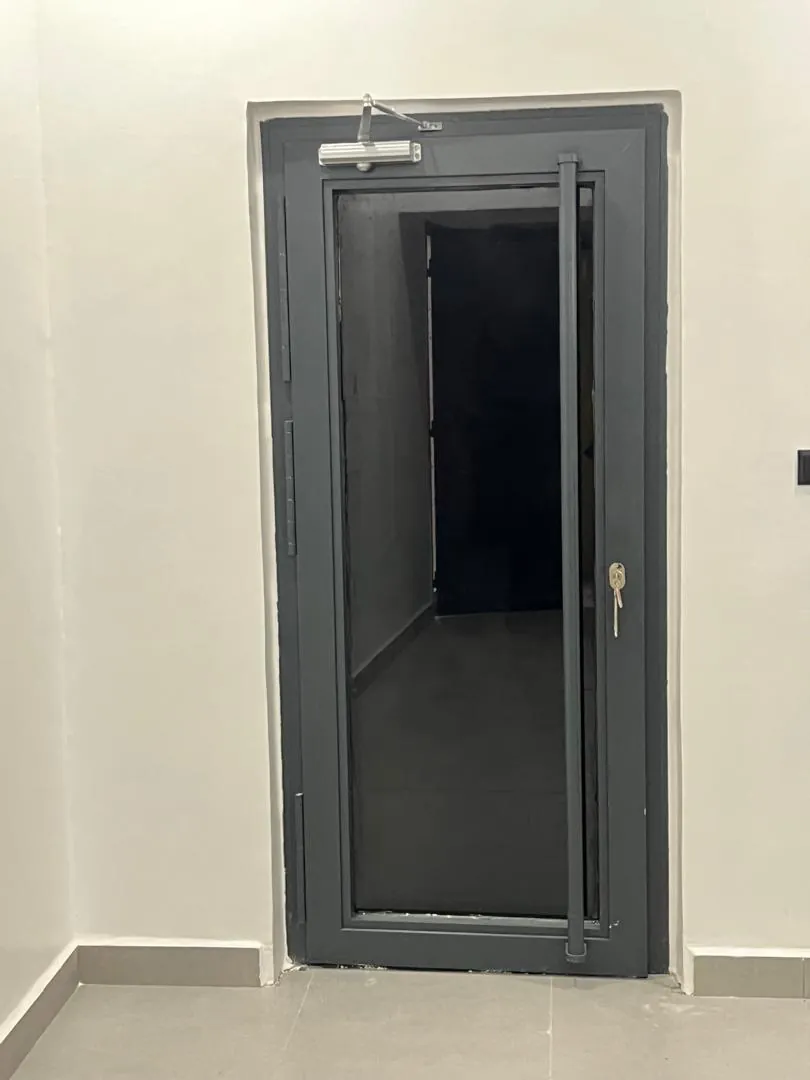 Real project
Bulletproof doors and windows
Frames that work to the same class as the glass: security doors, windows and counter partitions.
- System class EN 1522/1523
- Single or double leaf
- Fixed or opening
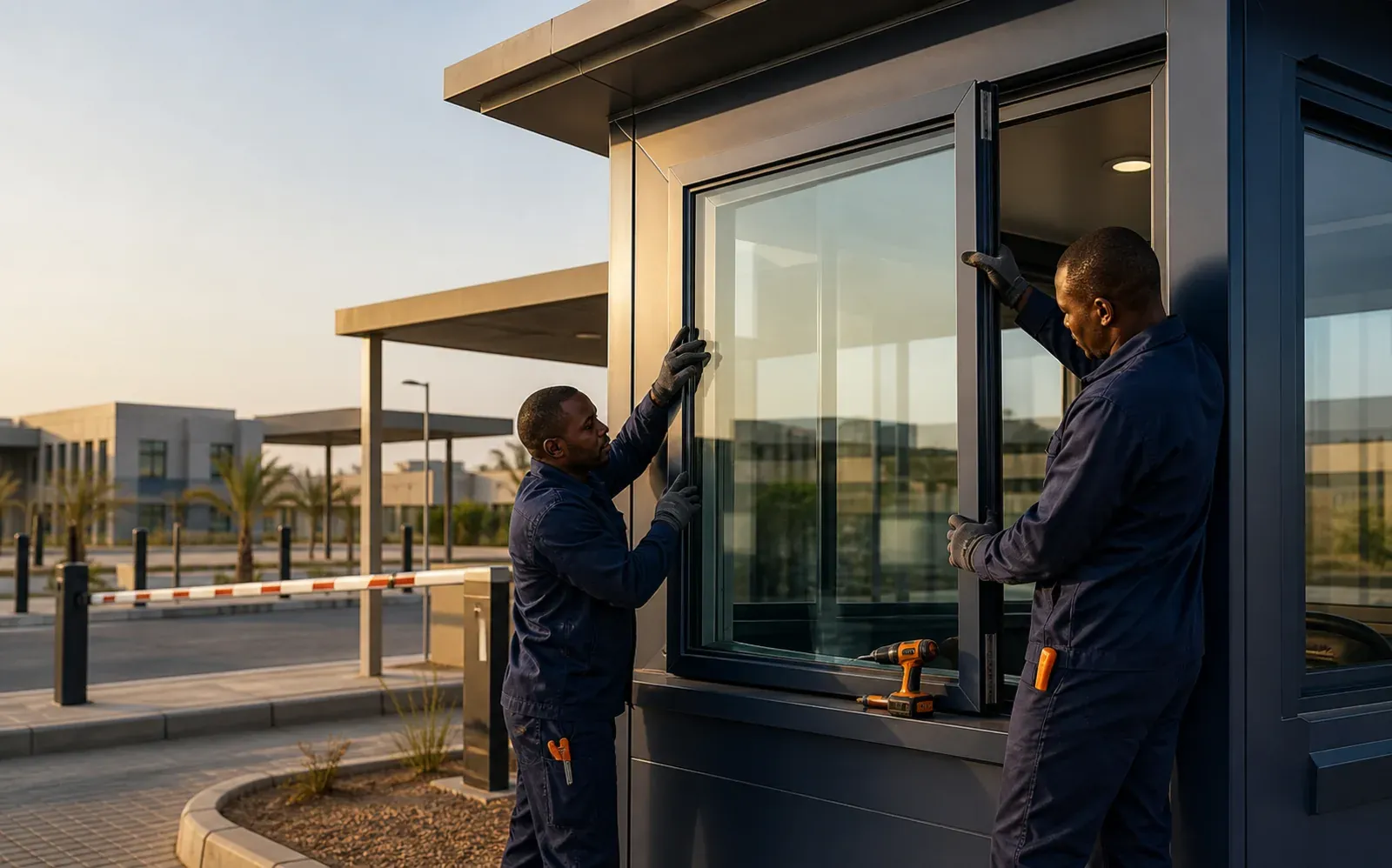
Guard booths and teller counters
Made-to-size glazed guard booths, bank teller counters and protected glass partitions.
- Made to size
- Selectable BR class
- Booth, counter, partition
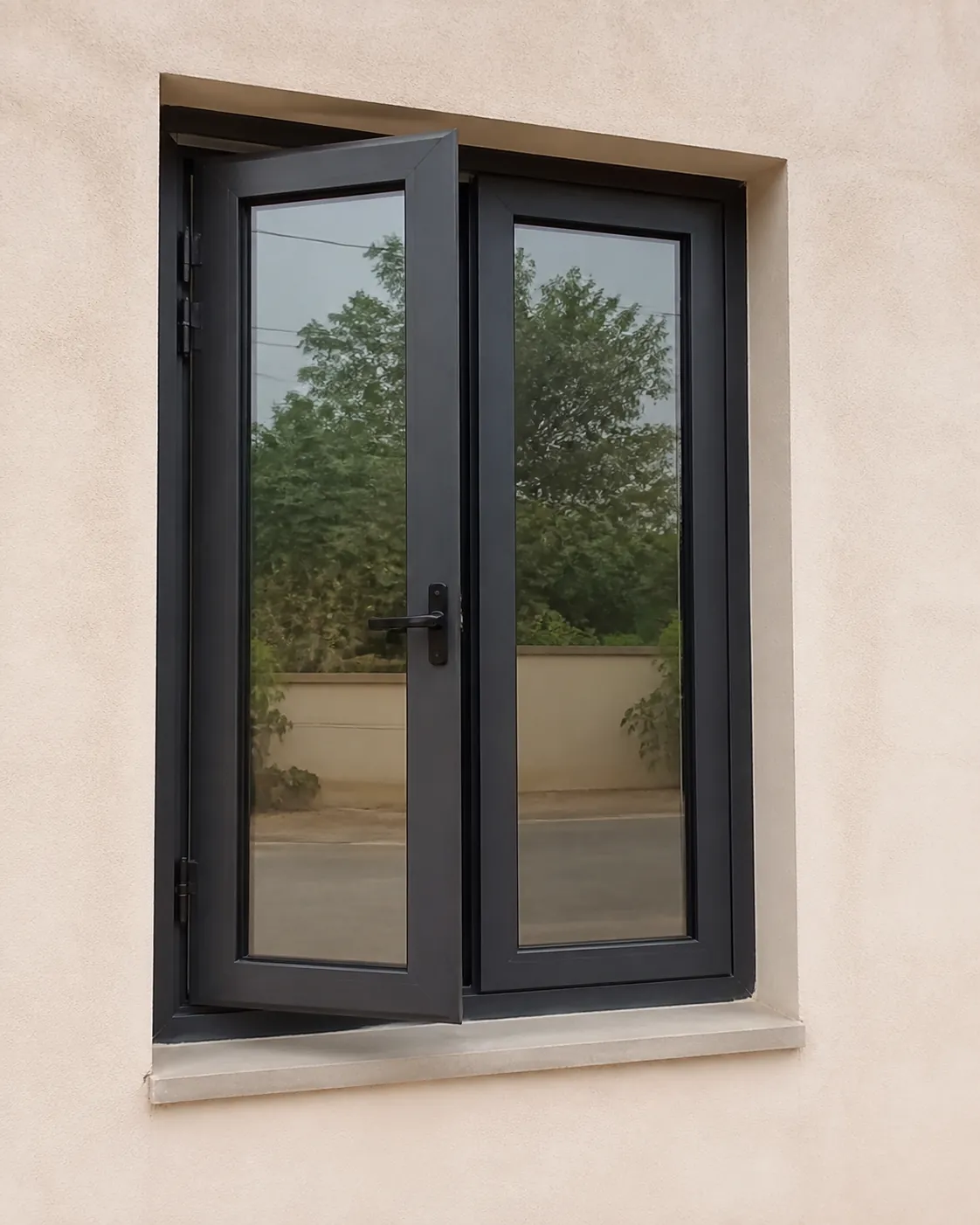 Real project
Aluminium windows and doors
Aluminium systems for doors, windows and glazed facades, suited to hot and dusty climates.
- Doors, windows, facades
- Insulated or standard
- RAL colours
Not finding your product?
We source on request for building and hardware, consumer goods, custom manufacturing and OEM. Tell us the product and quantity and we start the supplier search.